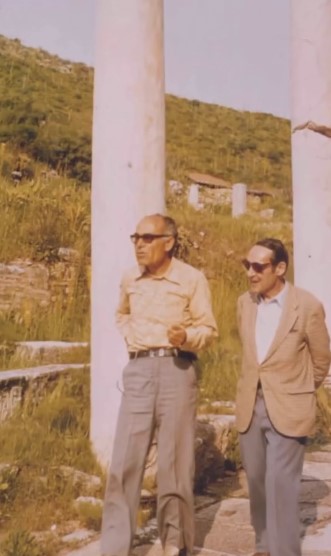
Musa Baran and Sabiha Tansuğ
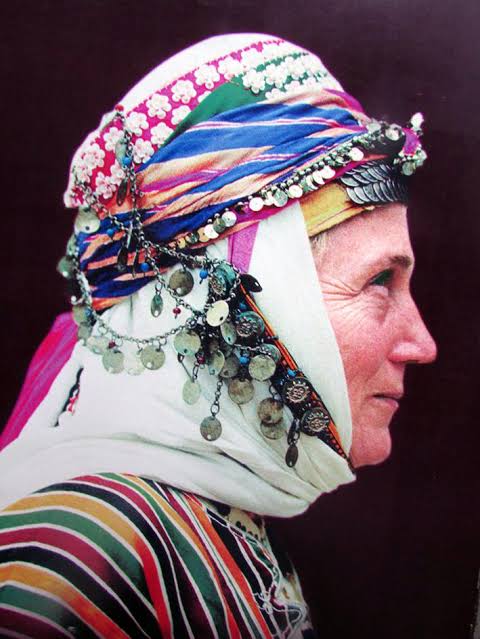
In their writings from 1991–1992, Musa Baran and Sabiha Tansuğ, in a conversational tone, explore the traditions and customs of the society Karacaoğlan lived in, from his time to the present day. They examine aspects of women’s clothing, such as the buttons on their chests, their head jewelry, how they tie their yemeni (headscarf), and how they are described through the eyes of their lovers. Their writings present a document that sheds light on the 16th century and continues into modern times.
From Musa Baran’s writing:
"She ties silver on her forehead,
She carries a silk pouch tucked under her arm.
In the early morning, as she walks through the garden,
You’d think she’s flowing like water."
Karacaoğlan saysI searched and searched,
Once I stayed beside her, entertained.
I offered my hand to her budding rose,
But the rose turned into a thorn, piercing me.
From Sabiha Tansuğ’s writing:
"The white of your chest is hidden behind a button,
Your black hair does not touch your neck.
Without harming the tender rose,
Press it to your cheek, and let it wither as you walk."
These pieces exemplify the interplay of traditional attire, beauty, and nature, vividly capturing the essence of Karacaoğlan’s poetic language and the cultural significance of clothing, personal adornment, and love in Turkish folk literature.