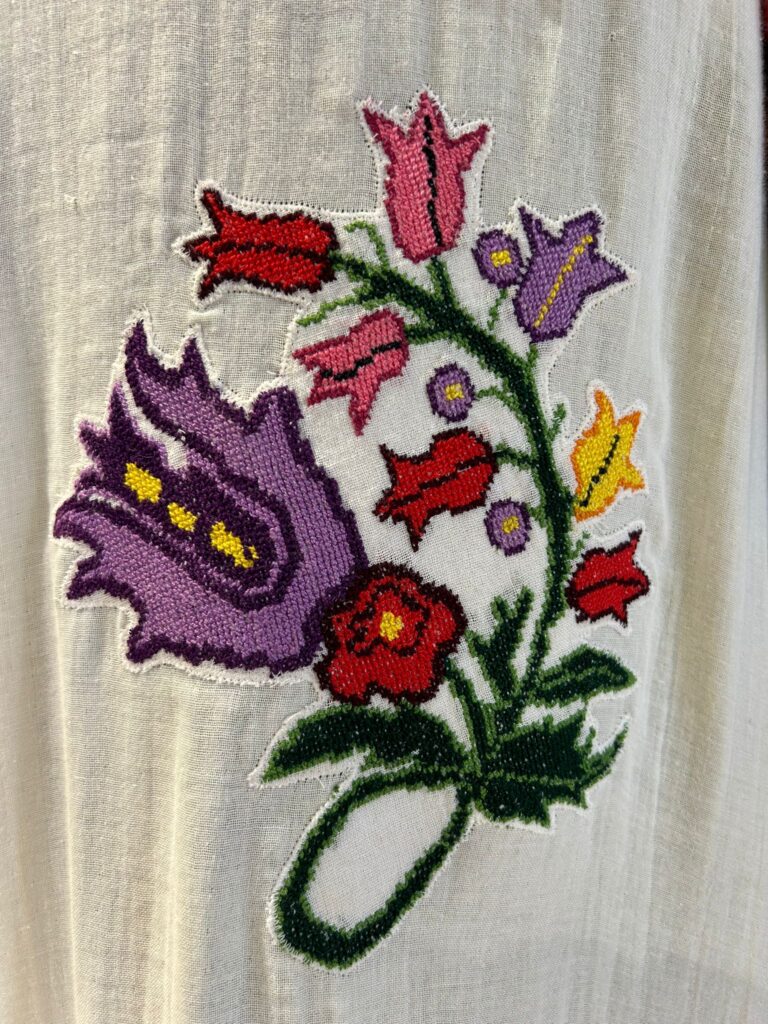
CROSS-STITCH
Cross-stitch, derived from the Italian word "canavaccio" meaning "lace" and the Greek word "kavvabic" meaning hemp, is a form of embroidery created by women in Turkey and around the world. They form crosses by linking colored threads on sparsely woven carpets. This embroidery style, as old as weaving history itself, occupies an important place in the history of embroidery, as it can be applied to every type of fabric, from carpets to silk textiles.
Depending on the region where it is made and the characteristics of the fabric used, it may be referred to by names such as "etamine work" or "gobelin work." To embroider on plain fabric, a loose cloth known as "kanave" is basted onto the fabric, making the cross-stitching easier. After the embroidery is completed using the fabric's pores, the kanave cloth is carefully pulled out thread by thread.
The Turks, who wove plain and loose fabrics on carpet looms using wool, also embroidered patterns with colored threads on fabrics using the cicim technique, transforming cross-stitch into a form of communication. We can consider the cicim technique as the beginning of cross-stitch art in Anatolia.
References:
Bademler Art Village Museum Store Archive. (2025, January).