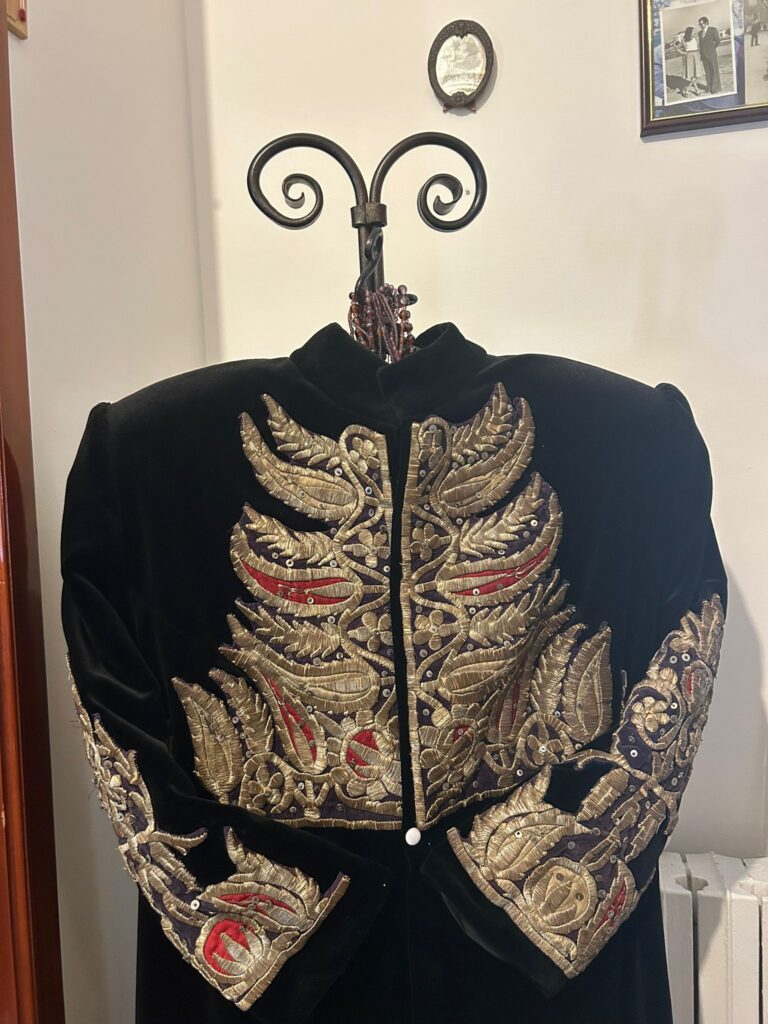
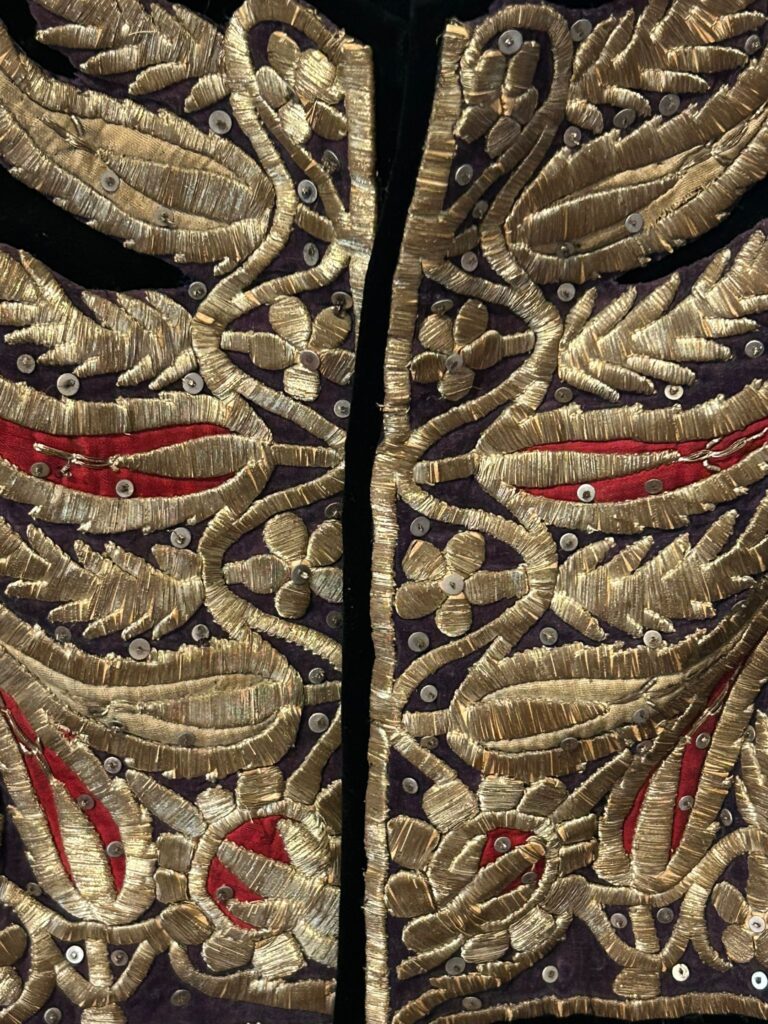
KAFTAN
A kaftan from the 8th and 10th centuries, now in the collection of the Metropolitan Museum of Art, is a long-skirted, front-opening garment worn while riding horses in the Caucasus. Kaftans have been valuable cultural treasures that carry the rich history of science, art, and culture from the Seljuk and Ottoman periods to the present day.
The bride wears a kaftan as part of her bridal attire, as well as during the henna night. The most magnificent kaftans are made for sultans and princes. The rank of the palace officials is reflected in the kaftan worn by their wives, with the same rank embroidered on their garments. In the Ottoman Empire, members of the Imperial Divan who were sentenced to death were dressed in black kaftans.
The Turkish proverb "Biçilmiş kaftan," which means "a perfect fit," is an example of how our rich culture has left traces in language, describing how a situation aligns with a person’s talents and character.