BUTTON
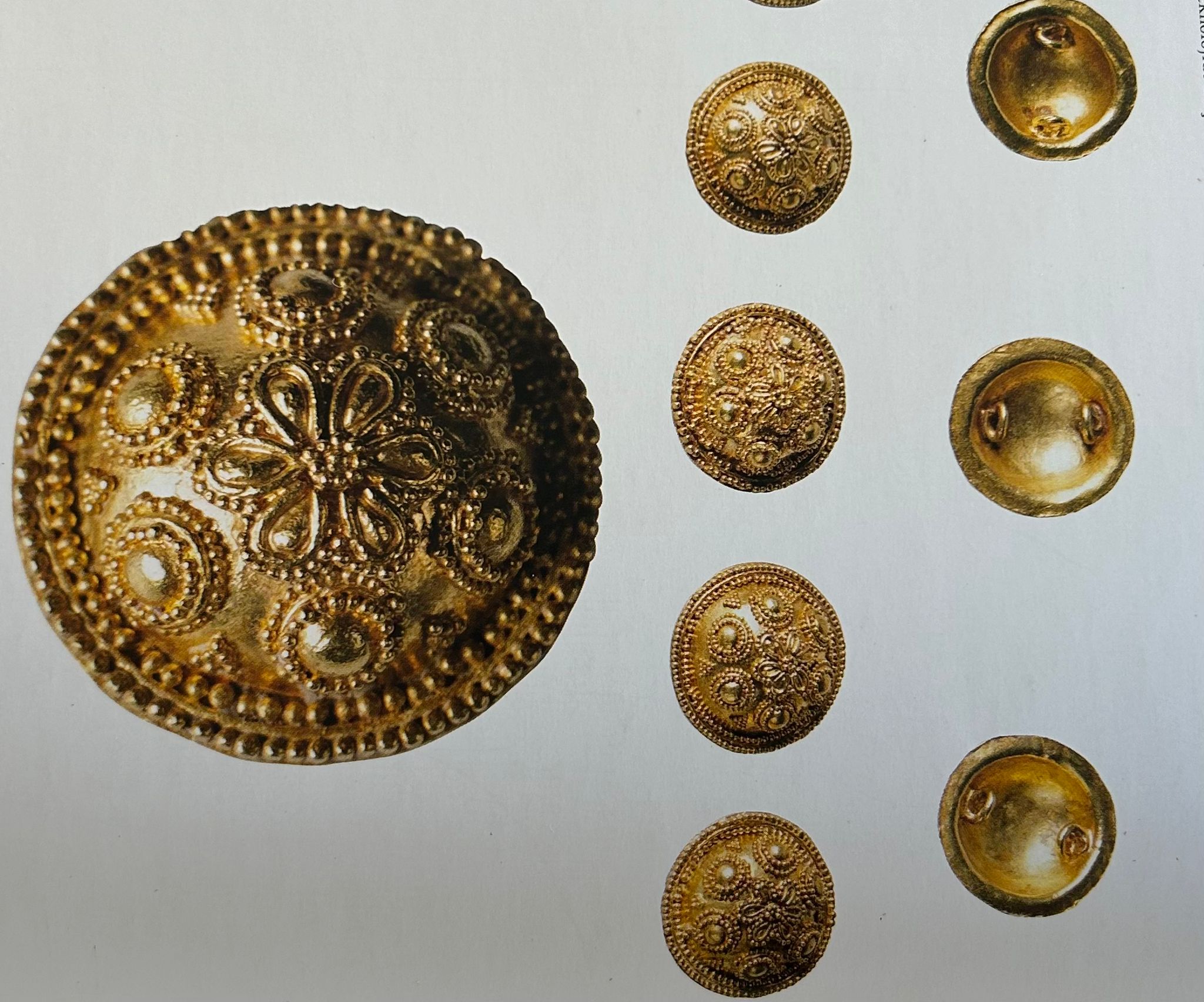
Based on information obtained from archaeological excavations, it can be inferred that objects such as wedges and buttons, used to join two fabrics, have been an integral part of clothing history since ancient times. Buttons used for ornamental purposes in Urartu, as well as clothing buttons made of gold and silver, and Urartu buttons dating back to the 8th-7th century BC, which are found in the Museum of Anatolian Civilizations in Ankara, showcase this ancient craft.
With examples made from bone, seashells, mother-of-pearl, pebbles, tree bark, lacework, fabric coverings, or knot techniques, buttons have served as a creative source throughout history.
References:
Yapı Kredi Culture and Arts Publishing. (2004). Urartu: War and aesthetics. Istanbul.